When the Way is a Person
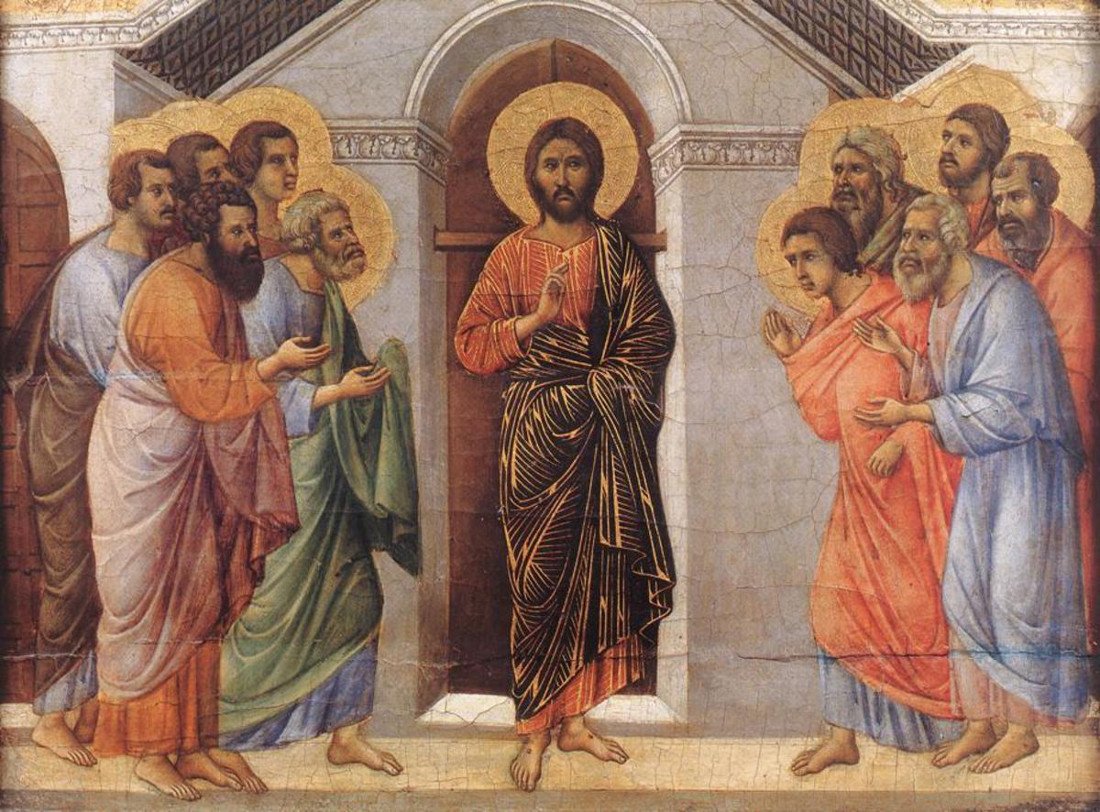
“I will take you to myself, that where I am you may be also: and you know the way to the place where I am going.” (John 14)
When was the last time you folded a paper map? The statistics say if you are under 40 you are unlikely to have ever owned one. But, until about 20 years ago, they were important to get to anywhere unfamiliar: even if it was just the Tube map, you had to have one: you had to memorise street names, keep your eyes open for landmarks and road signs. Until of course the modern miracle of GPS. Now, navigation is simply a matter of following an arrow on a screen. A voice says turn left in two hundred metres — and we turn left, without really knowing why, or where we are, or how the pieces fit together. The only choice is which accent we want the voice in – the English one, the American one, for the adventurous, even an Australian one. But that is the extent of the choice, and then you follow. It is a passive experience. You get to your destination, without really learning the journey.
The Apostles came to find themselves in a situation not unlike that. Three years of following Jesus, of letting him do the directing, until Jesus reveals that he will not be with them forever but that nonetheless, they know the way. Thomas, always so human, replies that he isn’t so sure he does. Philip asks “Lord, show us the Father, and we will be satisfied”. In other words: just give us the destination. Just tell us where we're going. We'll follow the arrow.
But Jesus in response, doesn't point the way. Rather, he says: I am the way.
Not I will show you the way. Not I know the route. But I am it. The way is not a set of directions. The way is a person. Indeed — stranger still — also the truth and the life. Not so much three separate things, but one thing, seen from three angles. The way, the destination, and everything that makes the journey worth making, all become one human face. The earliest disciples called themselves not Christians initially, but followers of the Way — not a philosophy, nor an institution, but a manner of living shaped entirely by conformity to this one person. So, to know Jesus is to know the way. And paradoxically, to follow him is already to have arrived, at least in part.
Which raises an urgent question. If the way is a person — how do we know it? The answer is embarrassingly simple, but at the same time infinitely demanding. We look at him. Not the knowledge of a map, but the much richer knowledge of a person and his life. We look at what he did, how he lived, what he valued, who he stopped for, who he ate with, what he refused, what he challenged, what he endured. That is what the Gospels are for. The way is disclosed to us in that life. And that way will lead us to life and truth.
And what we find, when we look honestly, is not always easy to sit with. St Peter reminds us in his epistle that to be the person Jesus was, to be Way and Truth and Life, ultimately involved him opposing powerful forces and suffering the consequences. Jesus was the stone the builders rejected. The one dismissed, executed as a troublemaker by those who had earthly power. The way of Jesus on Good Friday did not look much like a way, even to the Apostles. And yet the mystery of Easter and the Resurrection is that it is the path of the rejected stone — the thing set aside as useless, that turns out to be the cornerstone, and the way to truth and life.
What is true for Jesus is also true for his followers. In our first reading we read of St Stephen’s final moments: he knew that defending a Gospel like Jesus’s – values so different from the world around him, might come at a cost. And yet having accepted that cost, Jesus appears to Stephen as an assurance that he had in fact found the way.
We are living, right now, through a moment when following Jesus’s way, as to some of his most fundamental values, may require us to take a risk or two in a world that seems to operate on very different lines. One of those is peace. Recently, as many of us will have seen, the new Archbishop of Canterbury met with Pope Leo XIV in Rome. In both of their addresses they independently called on Christians to be active supporters of peace and to raise our voice where we can against the use of aggression to achieve goals. To quote Archbishop Sarah: “Today, in the face of inhuman violence, and division, we must keep telling a more hopeful story: that every human life has infinite value; that we must work together for the common good – building bridges, not walls; and that the forces of death are overcome by the risen life of Christ. In return, Leo spoke of the “unarmed peace” that Christ brings, which does not depend on weapons, or the threat of overwhelming force, and invited Christians to bear prophetic, humble witness to this profound reality together.
What would Jesus do? It has become a much misused phrase, and a hard one to answer honestly. But in this case, we are not without resources. We look at the one whose first words to the Apostles at Easter was “Peace be with you”. The one who, at the moment of his own arrest, told Peter to put away his sword; and healed the ear of the man sent to take him. The one who, from the cross, refused the logic of violence and prayed instead for those who were killing him.
That is the way. It may not be the logic of the world. But in the logic of Easter, it is the only way that leads anywhere worth going.
And happily we are far from alone on that road. Today at the end of Mass we honour one particular companion who said yes to the way before anyone else. Mary said yes in the uncertainty of the Annunciation. Simeon warned her that a sword would pierce her heart. She followed anyway. On Good Friday she watched the way lead somewhere she could never have imagined surviving – nonetheless she stood with Jesus. And by that, she encountered the disciples’ joy of the empty tomb. In this church, she is called by her beautiful title Joy of those who sorrow. Note, not joy instead of sorrow. Joy through it, and beyond it, and on the other side of it. The Regina Caeli which we will sing is her song, and ours — the song of those who have found that the rejected stone has become the cornerstone, that the way of the cross is the way of life. And for that we should, in the words of that hymn – Laetare – rejoice.
“I will take you to myself, that where I am you may be also: and you know the way to the place where I am going.”